Top 10 Destinations in Cabo Verde for Your Next Adventure
Ten islands, one archipelago, and almost none of them feel alike. That’s the strange thing about Cabo Verde: fly forty minutes between two of its islands, and you can go from a wind-battered desert dune to a green mountain valley thick with banana trees. Add in the Creole culture, the mornas drifting out of bars in Mindelo, and the volcanic rock that makes up half the coastline, and you’ve got a country that resists being summed up as “just another beach destination.”
That’s really the point of this guide. Cabo Verde does beaches extremely well — Sal and Boa Vista prove that — but reducing the country to sun loungers misses almost everything interesting about it. Below are the ten destinations worth knowing before you book, from the obvious headliners to the islands most visitors never make it to.
1. Sal
Sal is where most people’s Cabo Verde trip starts, and for good reason. It has the country’s main international airport, a stretch of coastline built almost entirely around Santa Maria Beach, and enough infrastructure that you can land, drop your bags, and be in the water within the hour.
Santa Maria itself is the draw — a long curve of pale sand and turquoise shallows that barely dips below postcard territory even in peak season. But Sal isn’t just a place to lie still. The wind that makes the island slightly less green than its neighbors also makes it one of the best kitesurfing spots in the Atlantic, and the visibility underwater is good enough that diving trips regularly turn up nurse sharks and the occasional wreck.
If you’re deciding when to go, November through July is the sweet spot — steady wind for water sports, minimal rain, and warm water most of the year.
2. Boa Vista
Boa Vista looks like someone picked up a slice of the Sahara and dropped it in the middle of the ocean. Dunes roll right up to the shoreline in places, and the beaches stretch on for so long that finding a stretch entirely to yourself isn’t hard, even in high season.
Santa Monica Beach is the one everyone mentions, and it earns the reputation for miles of empty sand with almost nothing built on it. Between June and October, loggerhead turtles come ashore here to nest, and guided night walks let you watch it happen without disturbing them. During the day, quad bike tours head inland toward the dunes and abandoned shipwrecks that give the island its slightly eerie, end-of-the-world character.
Anyone who wants beach time without crowds and doesn’t mind a landscape that’s more Namibia than Caribbean will find Boa Vista hard to beat.
3. Santiago
Santiago is where Cabo Verde actually happens, day to day. It’s the largest island and home to Praia, the capital, which trades resort polish for real markets, real traffic, and a genuine sense of a working city rather than a tourist set piece.
The must-see here is Cidade Velha, the old colonial settlement a short drive from Praia and one of the earliest European towns built in the tropics. Wandering its stone streets and the ruins of its fort gives you a much clearer sense of Cabo Verde’s Portuguese and West African history than any beach ever could. Back in Praia, the produce markets and roadside grogue stalls are where you’ll actually talk to locals, and live music venues around the city keep the island’s Creole rhythms very much alive after dark.
Santiago also has a mountainous interior; the Serra Malagueta range offers hikes through terraced farmland that feel a world away from the coast.
4. Santo Antão
If Sal is Cabo Verde’s beach face, Santo Antão is its wild, vertical opposite. This is hiking country — sheer volcanic ridges, terraced farmland clinging to impossible slopes, and valleys so lush they barely seem to belong in the same country as Boa Vista’s deserts.
Paul Valley is the centerpiece, a deep green gash through the mountains lined with sugarcane, papaya, and coffee plants tended by farmers who’ve worked the same terraces for generations. From there, trails fan out across the island; the walk from Cova crater down to Paul is one of the most photographed hikes in the country, and routes near Ribeira Grande and Ponta do Sol wind through cliffside villages that still feel genuinely remote.
Come with proper shoes and a few days to spare. This isn’t an island you rush.
5. São Vicente
São Vicente’s story is really Mindelo’s story. This harbor city has produced more of Cabo Verde’s musical legacy than anywhere else in the country — it’s the hometown of Cesária Évora, and morna and coladeira still spill out of bars along the waterfront most nights of the week.
Beyond the music, Mindelo has a colonial charm that feels distinct from Praia — pastel buildings, a lively fish market, and a bay that fills with sailboats during the annual carnival season, one of the best in West Africa. The beaches nearby, like Laginha, won’t rival Sal’s, but they’re not really the point here. People come to São Vicente for the atmosphere: restaurants serving fresh catch, late-night bars, and a cultural pulse that outlasts most other islands after sunset.
6. Fogo
Fogo is the island that looks like it shouldn’t be inhabited, and yet people live inside its volcano. Pico do Fogo dominates everything here: a near-symmetrical cone that last erupted in 2014 and still smokes faintly from certain angles.
The hike to the summit is the main event, a demanding but doable climb through jet-black volcanic rock that rewards you with views over the entire caldera. Inside that caldera sits Chã das Caldeiras, a small farming community that grows grapes and coffee in soil that’s basically pure ash — and somehow produces genuinely good wine because of it. Tasting Fogo coffee or a glass of the local red while looking up at the cone that made both possible is one of those experiences that’s hard to replicate anywhere else on Earth.
No other Cabo Verde island comes close to Fogo’s sense of raw, geological drama.
7. Maio
Maio is what Sal and Boa Vista might have looked like before tourism arrived. It sits close to both, geographically, but gets a fraction of the visitors, which means its beaches — long, pale, and often empty feel more like a discovery than a destination.
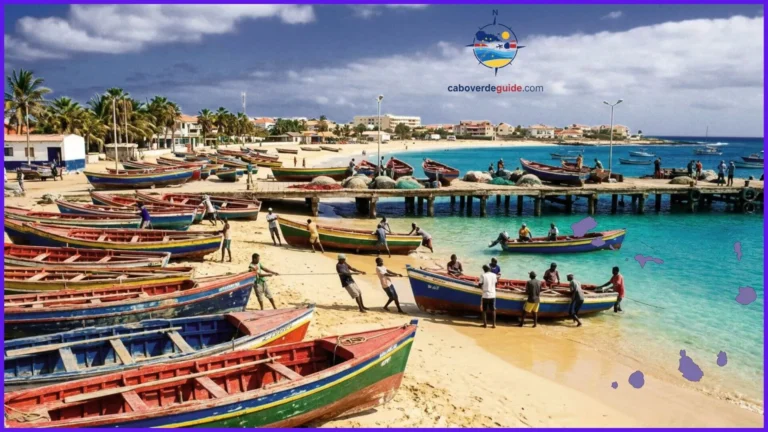
Vila do Maio, the main town, is small and unhurried, with colorful houses and not much in the way of nightlife or resorts. That’s the appeal. Fishing communities around the island still run on the same rhythms they always have, and the lack of development means the coastline has stayed genuinely wild in places.
Maio isn’t for anyone chasing activities or amenities. It’s for people who want a few days where nothing much happens, and that’s exactly the point.
8. Brava
Brava is the smallest inhabited island in Cabo Verde, and getting there, usually by ferry, since flights are limited, is part of what keeps it so untouched. Once you arrive, it’s obvious why locals call it “Ilha das Flores,” the Island of Flowers.
Nova Sintra, the main town, sits high enough in the hills to catch cooler air and enough moisture to support gardens that wouldn’t survive on most other islands. Steep green valleys, flowering courtyards, and walking paths connecting small villages give Brava a softness that feels almost European compared to the volcanic starkness of Fogo next door.
It won’t suit anyone looking for beach time or nightlife, but for travelers who want scenery and quiet in equal measure, Brava is one of the country’s best-kept secrets.
9. Santa Luzia
Santa Luzia is the outlier on this list because no one actually lives there. It’s Cabo Verde’s only uninhabited island, a protected nature reserve accessible solely by boat trip from São Vicente or São Nicolau.
What you get in exchange for the effort is a landscape almost untouched by development: wind-carved dunes, empty beaches, and waters that support seabird colonies and marine life rarely disturbed by human traffic. Boat operators run day trips that combine snorkeling with time onshore, though conditions depend heavily on the wind and swell.
Santa Luzia isn’t an easy add-on to a standard itinerary, but for travelers who specifically want to say they’ve been somewhere almost no one else has, it’s unmatched.
10. Tarrafal
Tarrafal sits at the northern tip of Santiago, far enough from Praia that it feels like its own world. The beach here is sheltered and calm, a bay ringed by palm trees that’s noticeably gentler than the wind-whipped coastlines further south.
Beyond the sand, Tarrafal carries some heavy history: the old Portuguese concentration camp on its outskirts, used to hold political prisoners during the colonial era, is now a memorial and museum worth visiting for context on Cabo Verde’s path to independence. Back in town, the pace slows down considerably: fresh seafood, small guesthouses, and an evening rhythm built around the plaza rather than any kind of nightlife scene.
It’s an easy contender for one of the best places to visit in Cabo Verde if what you want is history alongside your beach time, without the crowds of Sal or Boa Vista.
Which Cabo Verde Destination Is Best for You?
- For beaches: Sal and Boa Vista
- For hiking: Santo Antão
- For culture: Santiago and São Vicente
- For volcano adventures: Fogo
- For peace and solitude: Maio and Brava
- For remote exploration: Santa Luzia
Best Time to Visit Cabo Verde
Cabo Verde runs on two broad seasons. The dry season, roughly November through June, brings steady trade winds, minimal rain, and the most reliable conditions across all the islands. This is also when the kitesurfing and windsurfing crowds descend on Sal and Boa Vista.
If beaches and water sports are the priority, aim for December through April, when the sea is calmest and the wind is consistent without being extreme. Hikers heading to Santo Antão or Fogo should target the cooler months too, ideally between November and March, since the volcanic trails get brutally exposed once the sun is stronger later in the year.
The rainy season falls between August and October, concentrated mostly on the mountainous islands like Santiago, Santo Antão, and Fogo — Sal and Boa Vista, being flatter and drier by nature, see far less of it. Rain here rarely means days of washout; it’s usually short, heavy bursts rather than prolonged storms. For festivals, plan around São Vicente’s carnival in February or Praia’s independence celebrations in July, both of which turn the islands’ usual pace up considerably.
How to Travel Between Cabo Verde Islands
Inter-island travel comes down to two options: flying or taking the ferry. Domestic flights, run mainly by Cabo Verde Airlines and Halcyonair, connect the main islands quickly — Sal to Santiago, for instance, takes under an hour — but schedules can be limited and occasionally unpredictable, so it’s worth building buffer days into any itinerary that depends on them.
Ferries are the cheaper, slower alternative, and they’re genuinely the better option for a few specific routes — particularly between São Vicente and Santo Antão, where the crossing is short and frequent. Longer ferry routes, like anything heading to Brava or Fogo, take more patience and are more weather-dependent.
If you’re combining islands, the easiest pairings are the ones that are geographically close and well-served by both flights and ferries: Sal with Boa Vista, or São Vicente with Santo Antão. Trying to cover all ten islands in one trip isn’t realistic for most travelers — picking three or four that match your interests, and building in slack for delayed flights or rough seas, makes for a far less stressful trip.
What makes Cabo Verde worth the trip isn’t any single island; it’s the range between them. One week you could be climbing black volcanic rock on Fogo, and a few days later you’re doing nothing at all on an empty beach in Maio. Few countries this size pack in that much variation.
It’s worth resisting the pull toward just Sal and Boa Vista, as beautiful as they are. The islands that take more effort to reach Santo Antão’s valleys, Fogo’s caldera, Brava’s flower-covered hills tend to be the ones people remember most vividly once they’re home. Cabo Verde rewards travelers who go looking for its quieter corners, not just its brochure shots.
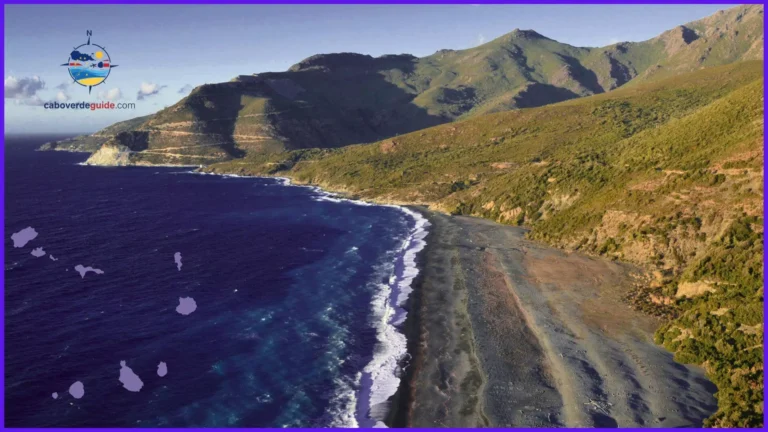
However you plan it, the same image tends to stick: volcanic peaks fading into Atlantic haze, waves breaking against black rock, and small island villages going about their evening as if nothing outside their coastline exists. That’s the real pull of these ten destinations in Cabo Verde: not one perfect postcard, but ten very different ones.
FAQs
What are the best destinations in Cabo Verde? Sal and Boa Vista lead for beaches, Santo Antão for hiking, Santiago and São Vicente for culture and history, and Fogo for its volcanic landscape. Which is “best” really depends on what kind of trip you’re after.
Which Cabo Verde island is best for first-time visitors? Sal is the easiest entry point — it has the main international airport, established tourist infrastructure, and reliable beach weather, making it a low-friction introduction to the country.
What is the most beautiful island in Cabo Verde? It’s genuinely subjective, but Santo Antão and Fogo consistently top the list for dramatic scenery, while Sal and Boa Vista win out if beaches are your definition of beautiful.
Which Cabo Verde island is best for hiking? Santo Antão, without much competition. Its terraced valleys and mountain trails are considered some of the best hiking terrain in West Africa. Fogo offers a shorter but more intense volcano hike.
Is Cabo Verde expensive to visit? It’s moderately priced compared to European destinations, though flights in can be costly depending on your origin. Accommodation and food are reasonable, especially away from Sal’s resort strip.
How many days do you need in Cabo Verde? A single island can be enjoyed properly in 4–5 days. If you want to combine two or three islands, plan for 10–14 days to account for travel time and flight or ferry delays.
Can you visit multiple islands in Cabo Verde? Yes, and it’s the best way to see the country’s range. Domestic flights and ferries connect the main islands, though schedules can be limited, so build extra time into your plans rather than a tight back-to-back itinerary.