
Planning a Trip to Cabo Verde: A First-Timer’s Visitor Guide
Cabo Verde is one of those places that’s easy to underestimate until you’re actually standing on it. Ten volcanic islands scattered off the coast of West Africa, each one different enough from the next that it barely feels like the same country — golden beaches on one, terraced mountain valleys on another, a smoking volcano cone on a third. Add in the Creole culture, the music that spills out of every bar in Mindelo after dark, and a pace of life that resists rushing, and you’ve got a destination that rewards a bit of planning before you go.
That’s really what this guide is for. Not a highlight reel, but the practical stuff — when to go, which island fits your travel style, how much to budget, what to pack, and how to string together a first trip that doesn’t try to do everything at once. If you’re planning a trip to Cabo Verde for the first time, here’s what actually helps.
Why Visit Cabo Verde?
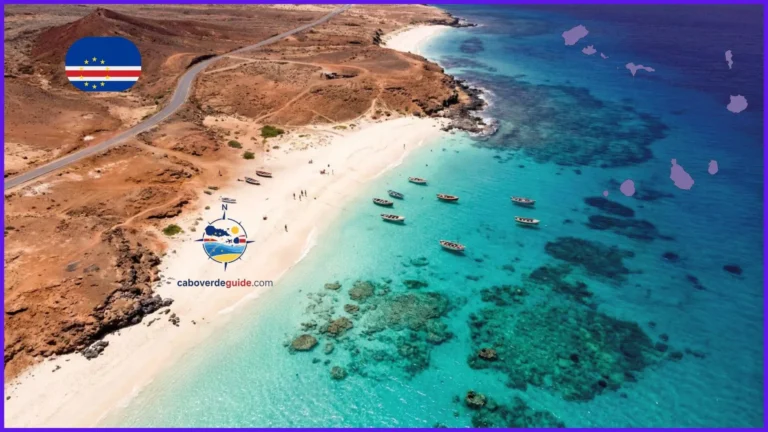
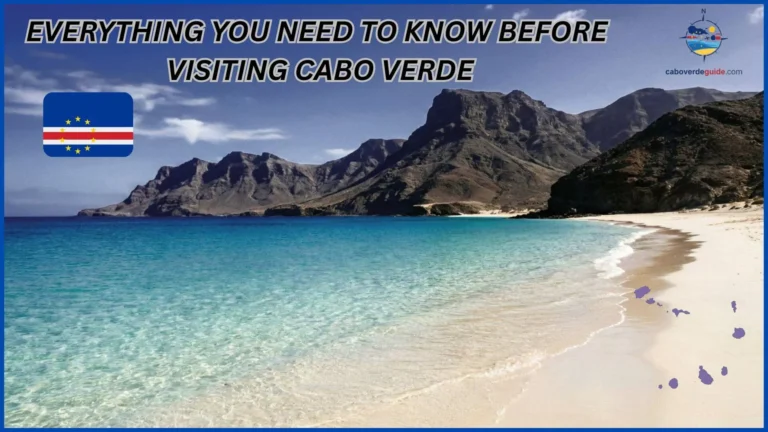
The short answer is that Cabo Verde does several very different things well, and most destinations only manage one or two. The beaches are genuinely excellent — long stretches of pale sand and warm, clear water on islands like Sal and Boa Vista that hold their own against anywhere in the Atlantic. But drive or fly a short hop away, and you’re in volcanic terrain that looks almost lunar, or hiking through valleys so green they don’t seem to belong in the same climate.
Then there’s the culture. Cabo Verde’s Creole identity — a blend of Portuguese colonial history and West African roots — shows up in the food, the language, and especially the music. Morna, the melancholic, blues-like genre made famous worldwide by Cesária Évora, still plays live in bars most nights of the week in São Vicente.
What makes the country work as a destination is that it doesn’t force you to choose between adventure and downtime. You can spend a morning hiking a volcanic crater and an afternoon doing absolutely nothing on a beach that has maybe four other people on it. Few places balance that as naturally as Cabo Verde does.
When Is the Best Time to Visit Cabo Verde?
Cabo Verde’s climate is fairly stable year-round by tropical standards, which takes some of the pressure off timing your trip perfectly. Still, there are real differences between seasons worth knowing.
The dry season runs roughly from November through June, and this is when most visitors come. Rainfall is minimal across the board, and the trade winds that define islands like Sal and Boa Vista are steady and reliable — good news if kitesurfing or windsurfing is on your list. December through April tends to be the sweet spot for pure beach weather: warm air, warm water, and calm seas.
If hiking is more your priority, aim for the cooler stretch of the dry season, roughly November to March. Santo Antão and Fogo’s volcanic trails get intensely exposed once the sun strengthens later in the year, and cooler temperatures make a real difference on longer routes.
The rainy season falls between August and October and affects the mountainous islands — Santiago, Santo Antão, Fogo — far more than the flatter, drier islands like Sal and Boa Vista. Even then, rain usually comes as short, heavy bursts rather than days of washout, so it’s rarely a dealbreaker.
If festivals matter to your trip, build around them: São Vicente’s carnival in February is one of the best in West Africa, and Praia’s independence celebrations in July bring a different kind of energy to the capital.
Which Cabo Verde Island Should You Visit?
This is usually the first real decision, and it shapes everything else about the trip.
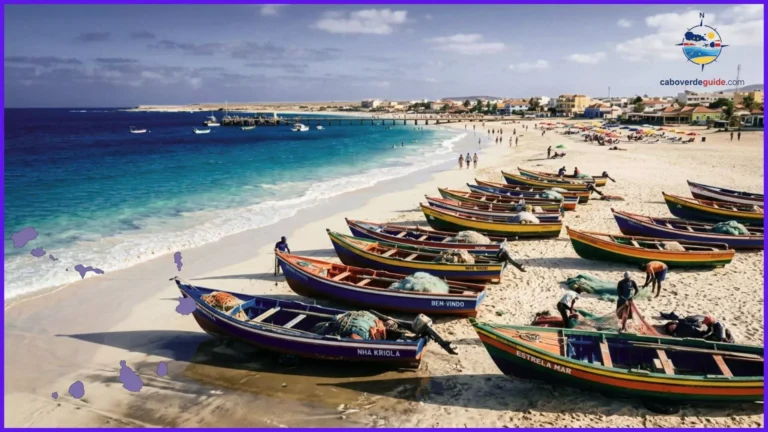
Sal is the easiest starting point — it has the main international airport, established resorts, and Santa Maria Beach, which covers pretty much every beach-holiday box on its own. It’s also the base for most water sports, from diving to kitesurfing.
Boa Vista leans into desert scenery — dunes running straight into the ocean, turtle nesting season between June and October, and beaches long enough that solitude isn’t hard to find.
Santiago is where the country’s actual history and daily life live. Praia, the capital, and Cidade Velha, one of the oldest colonial settlements in the tropics, both sit here, alongside markets and live music that feel considerably less staged than resort entertainment.
Santo Antão is for hikers. Steep volcanic ridges, terraced valleys like Paul Valley, and trails that wind through villages barely touched by tourism.
São Vicente is the cultural and musical center, anchored by Mindelo — a harbor town with a strong nightlife scene and a direct line to Cabo Verde’s most famous musical exports.
Fogo offers the most dramatic single experience on the list: a still-active volcano you can hike, with a farming community living inside its caldera and producing wine from volcanic soil.
If you can only pick one, match it to what you actually want from the trip — beaches point to Sal or Boa Vista, culture points to Santiago or São Vicente, and adventure points to Santo Antão or Fogo. Most first-timers end up combining two.
How Many Days Do You Need in Cabo Verde?
It depends heavily on how many islands you want to see, and how much travel time you’re willing to absorb between them.
A 5-day trip works fine if you’re sticking to a single island — enough time to settle in, explore properly, and not feel rushed on either end.
A 7-day itinerary is the realistic sweet spot for most first-time visitors, and it usually allows for two islands if they’re well-connected, like Sal and Boa Vista, or São Vicente and Santo Antão.
A 10-day trip opens the door to three islands, particularly if you’re combining a beach island with a cultural or adventure-focused one.
A two-week trip lets you go further — pairing beaches, mountains, and maybe a volcano hike — without feeling like you’re sprinting from airport to ferry to airport.
The one thing worth saying clearly: trying to see every island on a first trip isn’t necessary, and it usually backfires. Flight schedules are limited, ferries depend on weather, and constant transfers eat into the time you’d rather spend actually being somewhere.
How to Get to Cabo Verde
Most international flights land at Amílcar Cabral International Airport on Sal or Nelson Mandela International Airport near Praia on Santiago, depending on your route. Direct flights from several European cities — including Lisbon, Amsterdam, and Milan — make Sal in particular an easy entry point, especially from Portugal given the historical and travel ties between the two countries.
On arrival, expect a fairly straightforward but unhurried process — Cabo Verde isn’t known for high-speed airport efficiency, so build in some patience. Most resorts and hotels on Sal and Boa Vista offer arranged transfers, and taxis are readily available at both main airports if you’re arranging your own accommodation.
When booking flights, it’s worth checking connections carefully if your trip involves multiple islands — some domestic routes only run a few times a week, and building your international arrival and departure around that schedule saves a lot of stress later.
How to Travel Around Cabo Verde
Getting between islands comes down to two options: domestic flights or ferries.
Flights, mostly operated by Cabo Verde Airlines and Halcyonair, connect the major islands quickly — under an hour in most cases — but schedules can be sparse and occasionally shift, so it pays to build a buffer day around any flight connection that matters.
Ferries are slower and cheaper, and genuinely the better choice for specific short crossings, especially between São Vicente and Santo Antão, where boats run frequently. Longer ferry routes, particularly to Brava or Fogo, take more time and are more exposed to weather delays.
As a rule, flying makes sense when time is tight, or the islands are far apart, while ferries work well for short, well-served routes. Either way, allow extra time around any inter-island transfer — treating it as a tight connection rather than a flexible window is one of the most common planning mistakes.
Where to Stay in Cabo Verde
Accommodation style varies a lot depending on which island you’re on. Sal and Boa Vista lean heavily toward all-inclusive beach resorts, which suit travelers who want convenience and don’t mind a more contained experience. Santiago, Santo Antão, and São Vicente lean toward guesthouses and smaller hotels, which tend to put you closer to local life and are usually more budget-friendly.
In Sal, Santa Maria is the main hub — resorts line the beach, and independent guesthouses sit a short walk further back at lower prices.
In Boa Vista, Sal Rei is the most practical base, with easy access to the town and reasonable proximity to the island’s best beaches.
In Santiago, Praia offers city-style hotels, while smaller guesthouses near Cidade Velha suit travelers more focused on history than nightlife.
In Santo Antão, Ribeira Grande and Ponta do Sol both work well as hiking bases, with small family-run guesthouses that often include home-cooked meals.
As a general approach: match your accommodation to your itinerary rather than the other way around. Booking a beach resort and then trying to squeeze in mountain hikes two islands away rarely works smoothly.
What to Do in Cabo Verde
Beyond picking an island, the actual activities are where the trip comes alive. Spend unhurried time on the Atlantic beaches — Santa Maria, Santa Monica, or the quieter stretches on Maio if you make it there. Explore the volcanic landscapes on Fogo, where the caldera and the still-active cone dominate the scenery. Hike the mountain valleys of Santo Antão, where terraced farmland clings to slopes that look almost impossible from a distance.
For water lovers, snorkeling, diving, and kitesurfing are all well-established, particularly around Sal and Boa Vista. For culture, spend time in Santiago’s markets and Cidade Velha’s old streets, or an evening in Mindelo listening to live morna. And wherever you are, take time to just talk to people — Cape Verdeans are known for their warmth, and some of the best parts of a trip here happen in casual conversation rather than on a checklist.
What to Eat and Drink in Cabo Verde
Cape Verdean food reflects the same blend of influences as the culture — Portuguese technique meeting West African ingredients, with the ocean never far away. Cachupa, a slow-cooked stew of corn, beans, and whatever meat or fish is available, is the national dish and worth trying in more than one place, since every cook has their own version.
Fresh seafood is everywhere and generally excellent — grilled fish, octopus, and lobster show up on menus at a fraction of what you’d pay elsewhere. Fogo’s coffee, grown in volcanic soil, has a distinct character worth seeking out, alongside the island’s small but respectable wine production.
For drinks, grogue, a strong sugarcane spirit distilled locally, is the traditional choice — often flavored with local fruit and served as a shot rather than sipped slowly. Food here isn’t an afterthought to the trip; it’s one of the clearest windows into island life you’ll get.
How Much Does a Trip to Cabo Verde Cost?
Costs vary widely depending on which islands you visit and how you travel between them. Flights from Europe fluctuate seasonally but are generally moderate compared to long-haul destinations. Accommodation ranges from budget guesthouses at a fraction of resort prices to higher-end all-inclusive stays on Sal and Boa Vista.
Food and drink are reasonable almost everywhere, especially away from resort restaurants — local eateries serving fresh fish and cachupa cost far less than hotel dining. Transportation between islands adds up faster than people expect, particularly if you’re relying heavily on domestic flights rather than ferries. Activities like diving, guided hikes, or turtle-watching tours carry their own separate costs worth factoring in early.
Broadly speaking, a budget trip focused on guesthouses, local food, and ferries is very achievable. A mid-range trip mixing resort stays with local exploration sits comfortably in the middle. Luxury travel, concentrated mostly on Sal’s high-end resorts, sits well above both. Simple ways to save include traveling in shoulder months, favoring ferries over flights where routes allow, and eating where locals eat rather than exclusively at hotel restaurants.
What to Pack for Cabo Verde
Lightweight, breathable clothing covers most of the trip, alongside swimwear and beach essentials if you’re spending time on Sal, Boa Vista, or Maio. Comfortable walking shoes are worth prioritizing even on beach-focused trips, since uneven terrain shows up more often than expected.
Sun protection matters more here than people anticipate — the combination of ocean glare and consistent sunshine adds up quickly. A light jacket earns its place too, since evenings on windier islands like Sal can turn cooler than the daytime heat suggests. Anyone heading to Santo Antão or Fogo should pack proper hiking gear, including sturdy footwear and layers for changing mountain temperatures. Finally, don’t forget the basics that are easy to overlook: valid travel documents, adapters for local plugs, and a portable charger, since connectivity and power access can be inconsistent on the smaller islands.
What to Know Before Visiting Cabo Verde
The local currency is the Cape Verdean escudo, and while card payments are increasingly accepted in resorts and larger towns, cash is still essential on smaller islands and at local markets. Portuguese is the official language, though Cape Verdean Creole is what’s spoken day-to-day — a few basic phrases in either go a long way with locals.
Cabo Verde sits on Cape Verde Time, one hour behind GMT, and uses the same two-pin plug standard as much of Europe. Internet and mobile connectivity are solid on Sal, Santiago, and São Vicente, but noticeably patchier on smaller or more remote islands, so it’s worth planning around that rather than assuming constant access.
Culturally, Cape Verdeans are famously warm and unhurried — matching that pace, rather than pushing against it, makes for a much smoother trip. Simple gestures, like greeting shopkeepers before getting straight to business, are appreciated and expected.
Is Cabo Verde Safe for First-Time Visitors?
Cabo Verde is generally considered one of the safer destinations in the region, but ordinary travel awareness still applies. Keep valuables out of sight in busier areas like Praia’s markets, and treat crowded spaces the way you would in any unfamiliar city.
Ocean conditions vary a lot between islands — some beaches have strong currents that aren’t obvious from the shore, so it’s worth checking locally before swimming somewhere new. Hiking on Santo Antão or Fogo comes with its own precautions, since trails can be steep, exposed, or poorly marked in places; going with a reputable local guide, particularly for the Fogo crater hike, is the safer and often more informative choice.
Beyond that, the usual smooth-trip habits apply: keep copies of important documents, stay aware of weather forecasts before ferry crossings, and don’t assume every island has the same level of medical or emergency infrastructure as Sal.
A Simple 7-Day Cabo Verde Itinerary for First-Time Visitors
Days 1–2: Arrive and Explore
Land, settle into your accommodation, and permit yourself to do very little on day one. Use day two to explore your immediate surroundings, get a feel for the local pace, and ease into island life with your first proper beach time.
Days 3–4: Adventure and Culture
Shift focus outward — whether that’s a hike, a volcano visit, or a day exploring a historic town like Cidade Velha. Use this stretch to try local food properly and take in whatever cultural experiences your chosen island offers.
Days 5–6: Beaches and Relaxation
Spend these days along the coast, mixing water activities with genuine downtime. This is the stretch to prioritize sunset walks and unhurried evenings by the ocean.
Day 7: Slow Morning and Departure
Keep the last day light — a final walk, a proper local breakfast, and time to pick up a few souvenirs before heading to the airport without feeling rushed.
Common Mistakes First-Time Visitors Should Avoid
The most frequent misstep is trying to visit too many islands on one trip, which usually means more time in transit than actually exploring. Closely related is underestimating travel time between islands — flights and ferries here run less frequently than in many other destinations, and delays aren’t unusual.
Packing only for the beach is another common gap, especially for anyone planning even a short hike. Underestimating the wind and sun catches people off guard too, particularly on Sal and Boa Vista, where both are stronger than they first appear. On the planning side, scheduling every hour of the trip tends to backfire — leaving room for unexpected moments, whether that’s a local festival or simply a beach you didn’t plan to stop at, is often where the best parts of the trip happen.
Is Cabo Verde Worth Visiting?
For travelers who want more than a standard beach holiday, yes — decisively. Cabo Verde suits adventurous types drawn to volcano hikes and mountain trails, culture-focused travelers interested in history and music, and anyone who simply wants excellent beaches without the crowds found elsewhere in the Atlantic.
It works well for couples looking for a mix of relaxation and exploration, families who want manageable logistics on islands like Sal, and solo travelers drawn to the warmth and openness of local communities. What sets it apart from other Atlantic island destinations is the sheer range packed into a small area — few places let you move between desert, mountain, and volcano scenery within the same country, let alone the same week.
Final Tips for Planning a Trip to Cabo Verde
Choose your islands carefully rather than trying to cover the whole archipelago at once. Build a realistic itinerary that accounts for transfer time, not just activity time. Leave room to slow down — some of the best experiences here happen outside a fixed schedule. Make an effort to experience local culture beyond the resorts, whether that’s a market in Praia or a bar in Mindelo. And above all, embrace the unexpected; delayed ferries and shifting plans are part of the rhythm here, not a failure of planning.
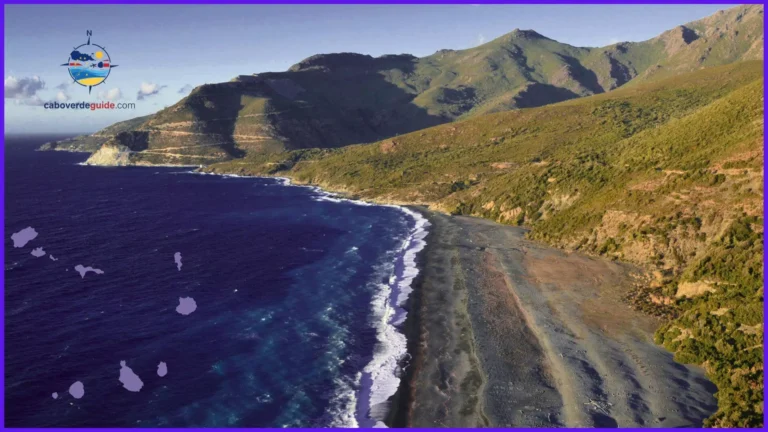
In the end, Cabo Verde isn’t a destination built for rushing. It’s volcanic peaks fading into Atlantic haze, waves breaking steadily against black rock, and island villages moving at their own unhurried pace — and planning a trip to Cabo Verde well means leaving enough space to actually experience all of it.
FAQs
Is Cabo Verde good for first-time travelers? Yes. Sal in particular offers an easy, well-connected introduction to the country, with the option to branch out to more adventurous or cultural islands once you’re comfortable.
How many days are enough for Cabo Verde? A week is enough for a solid first visit, especially on one or two well-connected islands. Ten days to two weeks allows for a more relaxed pace across three or more islands.
Which Cabo Verde island is best for first-time visitors? Sal, thanks to its international airport, established infrastructure, and reliable beach weather, making it the lowest-friction starting point.
What is the best month to visit Cabo Verde? Generally between December and April, when rainfall is minimal and sea conditions are calmest across most islands.
Is Cabo Verde expensive to visit? It’s moderately priced overall, with flights being the highest variable cost. Accommodation and food can be very affordable outside of resort-heavy areas.
Is Cabo Verde safe for tourists? Yes, with normal travel precautions. Basic awareness in busy areas, caution around ocean currents, and reputable guides for hikes cover most of the risk.
Do I need a visa to visit Cabo Verde? Most visitors need to obtain an entry visa, though it’s often processed as a simple online application before arrival. Requirements vary by nationality, so it’s worth checking current rules for your passport well before booking.
Can I visit several islands on one trip? Yes, and it’s a great way to experience the country’s range, though it’s best to limit yourself to two or three islands on a first trip to avoid excessive transfer time.
What should I pack for Cabo Verde? Lightweight clothing, swimwear, sun protection, comfortable shoes, a light jacket for windier evenings, and proper hiking gear if Santo Antão or Fogo are on the itinerary.
What language is spoken in Cabo Verde? Portuguese is the official language, but most people speak Cape Verdean Creole day-to-day. A few basic phrases in either are appreciated by locals.